

Pai Gow Poker is a unique and strategic casino table game that blends elements of traditional poker with a format inspired by the ancient Chinese game of Pai Gow. Instead of playing against other players, you compete only against the dealer. Your aim is to create two poker hands from seven cards that together outperform the dealer’s two hands. It’s slower-paced than many casino games and offers frequent pushes, making it popular with players who enjoy a more relaxed gambling experience.
The Goal of Pai Gow Poker
In Pai Gow Poker, you are dealt seven cards and must split them into two separate hands. One is a five-card hand, known as the high hand, and the other is a two-card hand, known as the low hand. The five-card hand must always rank higher than the two-card hand. After all players set their hands, the dealer reveals and sets theirs. Your high hand is then compared to the dealer’s high hand, and your low hand is compared to the dealer’s low hand.
To win, both of your hands must beat the dealer’s corresponding hands. If only one of your hands wins, the result is a push, meaning your bet is returned. If both of your hands lose, you lose your wager. If either hand is exactly the same as the dealer’s (a tie), it is called a copy and counts as a loss for the player.
Cards and the Role of the Joker
The game is played with a standard 52-card deck plus a single joker, making a total of 53 cards. The joker is not a fully wild card. It can only be used as an ace, or to complete a straight, a flush, or a straight flush. Understanding how to use the joker effectively is a key part of developing good strategy in Pai Gow Poker.
Understanding the Hand Rankings
Pai Gow Poker uses the same hand rankings as standard poker, with the addition of one rare top hand due to the joker.
From highest to lowest, the rankings are:
- Five Aces (four aces plus the joker)
- Royal flush
- Straight flush
- Four of a kind
- Full house
- Flush
- Straight
- Three of a kind
- Two pair
- One pair
- High card
In your two-card hand, the only valid combinations are a single pair or two high cards. The two-card hand cannot be stronger than the five-card hand — doing so is a foul and causes you to lose the hand automatically.
How the Game is Played
The round begins with all players placing their wagers. The dealer then gives seven cards to each player and to themselves. Each player examines their cards and sets them into one five-card hand and one two-card hand. This is the most strategic part of the game.
Once all players have set their hands, the dealer reveals their own hand and sets it using a specific method called the House Way. This is a predetermined strategy that the casino uses to ensure consistent dealer play.
Your hands are then compared to the dealer’s:
- If both of your hands beat the dealer’s, you win even money on your bet.
- If only one of your hands wins, it is a push and your bet is returned.
- If both hands lose or tie, you lose your wager.
Example of a Round
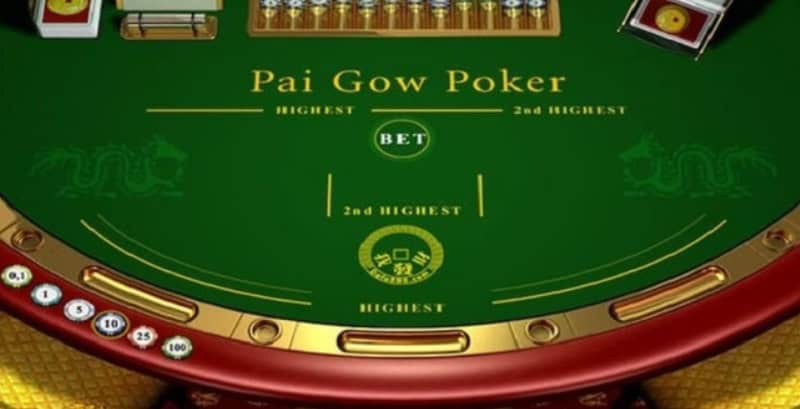
You are dealt the following seven cards: ace, king, queen, jack, ten, ten, three. You decide to place the straight (ace through ten) in your five-card high hand and the remaining ten and three in your two-card low hand. The straight gives you a strong high hand, and the ten-three is weak, but you have respected the rule that the high hand must be stronger than the low hand.
The dealer reveals their hands. If both of your hands beat the dealer’s hands, you win your wager. If only one beats the dealer’s, you push. If neither wins, you lose.
Payouts and Commission
Pai Gow Poker typically pays even money on winning bets. However, most casinos charge a 5% commission on your winnings. So if you bet £20 and win, you would receive £19 net after the £1 commission is taken.
Some casinos offer commission-free versions of the game. These usually change the rules slightly, such as allowing the dealer to win all ties or modifying how certain hands are ranked, in order to preserve the house edge.
Side Bets and Bonus Options
Many tables offer side bets to add excitement and the chance of larger payouts. The most common is the Fortune Bonus bet, which pays based on the total strength of your seven-card hand, regardless of whether you beat the dealer.
A typical Fortune Bonus payout table might look like this:
| Hand | Payout |
|---|---|
| Seven-card straight flush | 8,000 to 1 |
| Royal flush | 1,000 to 1 |
| Straight flush | 200 to 1 |
| Four of a kind | 50 to 1 |
| Full house | 5 to 1 |
| Flush | 4 to 1 |
| Straight | 2 to 1 |
These bets often come with higher house edges and should be approached as optional extras rather than part of a consistent strategy.
Tips for Setting Your Hand
The most important strategic choice in Pai Gow Poker is how you set your two hands. Here are a few basic tips:
- Never place your strongest cards in the low hand. Always keep the five-card hand stronger than the two-card hand.
- Use the joker wisely. If it helps complete a straight or flush in the five-card hand, do that. Otherwise, treat it as an ace.
- If you’re unsure how to set your hand, ask the dealer if you can use the House Way. Many casinos will set the hand for you this way if requested.
- When you have a two pair, consider placing the lower pair in the two-card hand, depending on the rest of your cards. This move depends on which pairs you have and is part of more advanced strategy.
Why Pai Gow Poker Appeals to New Players
Pai Gow Poker is an excellent game for players who want a slower-paced experience with lower risk. Because many hands result in a push, your bankroll tends to last longer than in other games. This makes it great for beginners or anyone looking for a more social table game with lots of opportunity to think through your decisions.
The game also rewards players who take time to understand hand rankings and develop a sense of how to split their cards most effectively. While there is some luck involved, the strategic aspect gives players meaningful control over how they play each hand.
Final Thoughts
Pai Gow Poker combines elements of classic poker with a structure that encourages careful decision-making. It’s less aggressive and more methodical than many casino games, and its frequent pushes make it ideal for players who like low-volatility gambling. Once you’ve learned how to set your hands and how the comparisons work, it’s a game that becomes easy to play and enjoyable over long sessions.